

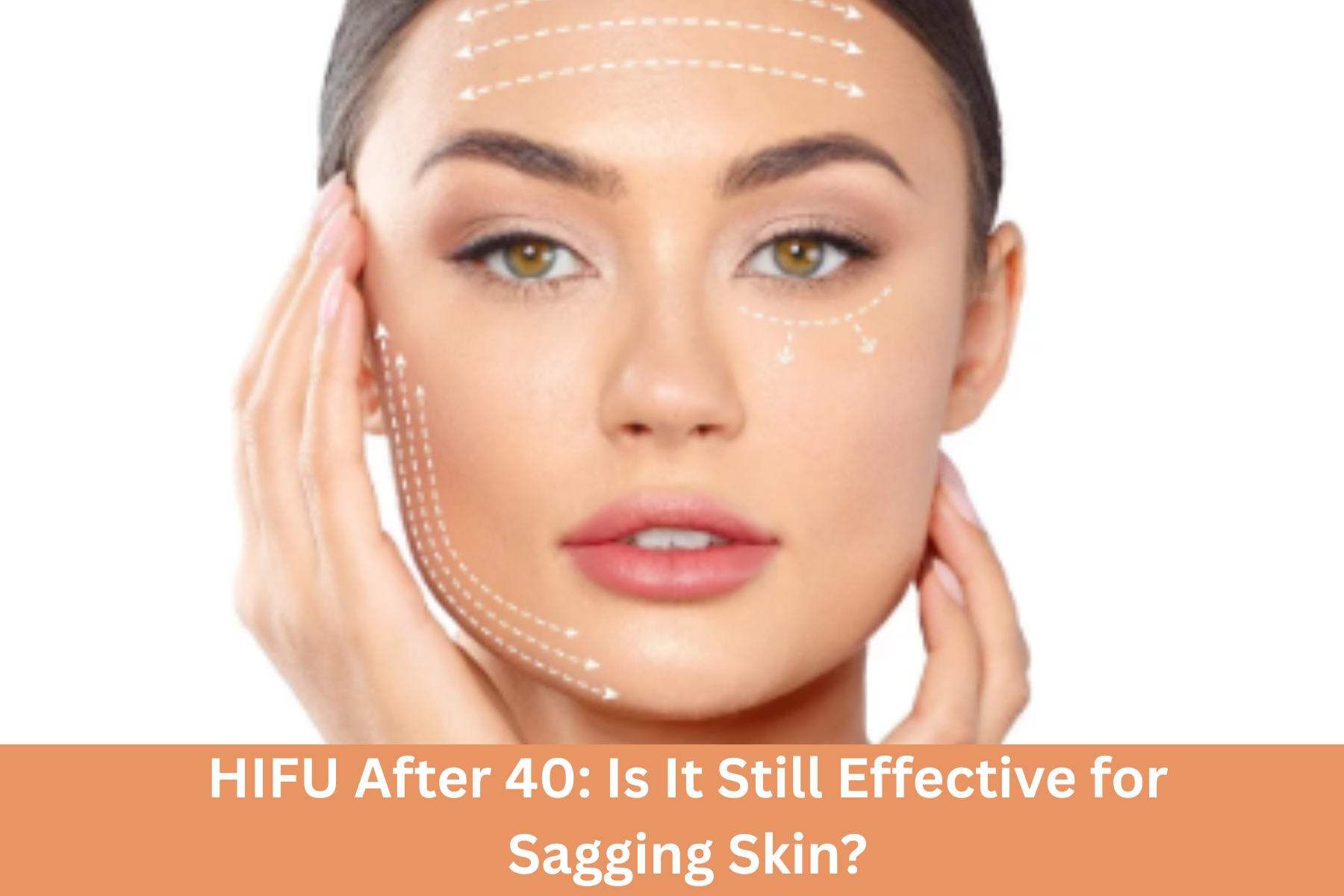
As we cross our 40s, many of us begin to notice changes that feel harder to ignore. Skin that doesn’t bounce back the way it used to. Jawlines that soften. Cheeks that slowly descend. Fine lines that seem to deepen almost overnight. If you’ve been researching non-surgical skin tightening options, you’ve likely come across HIFU treatment in Rajouri Garden.
But a common, very valid question remains: Is HIFU still effective after 40, especially for sagging skin? Let’s break it down honestly, medically, and realistically. So you know exactly what to expect.
What Happens to Skin After 40?
Before understanding how HIFU works after 40, it’s important to understand what’s happening inside the skin. By our early 40s, the skin goes through several biological changes:
- Collagen production drops significantly.
- Elastin fibers weaken and fragment.
- Fat pads in the face shift downward.
- Skin becomes thinner and less firm.
- Muscle tone beneath the skin reduces.
- Gravity and years of sun exposure catch up.
This combination leads to visible sagging, especially around: Jawline (jowls), Cheeks, Nasolabial folds, Neck, Upper eyelids.
At this stage, topical creams alone are usually not enough. This is where energy-based treatments like HIFU come into the picture.
What is HIFU and How Does It Work?
HIFU stands for High-Intensity Focused Ultrasound. It is a non-invasive skin tightening treatment that works by delivering focused ultrasound energy into the deeper layers of the skin. Without damaging the surface.
What makes HIFU unique is that it targets the SMAS layer (Superficial Musculo-Aponeurotic System), the same layer addressed during a surgical facelift. No cuts. No stitches. No downtime.
Here’s what happens during a HIFU session:
- Ultrasound energy heats targeted tissue zones.
- Controlled thermal injury stimulates collagen production.
- Existing collagen fibers contract.
- New collagen forms over the next 2–3 months.
- Skin gradually lifts, tightens, and firms.
Is HIFU Effective After 40?
Yes, HIFU can still be effective after 40, but the results depend on several important factors. HIFU is not a miracle replacement for surgery, especially in advanced sagging. However, for the right candidate, it can deliver noticeable, natural-looking improvement.
What HIFU Does Well After 40
HIFU works best for:
- Mild to moderate skin laxity
- Early jowling
- Sagging cheeks
- Loss of jawline definition
- Mild neck looseness
Patients in their early to mid-40s often see firmer skin texture, subtle lifting of cheeks and jawline, improved facial contours, and better skin tightness over 8–12 weeks.
Where HIFU Has Limitations
HIFU may not give dramatic results if:
- Sagging is severe
- There is significant excess skin
- Fat loss is extreme
- Skin quality is very thin
In such cases, combination treatments or surgical options may be more appropriate.
Why Results After 40 Vary From Person to Person
Two people of the same age can show very different signs of aging. This is because skin aging is influenced by multiple internal and external factors. HIFU results after 40 depend largely on the following:
1. Degree of Sagging
The extent of skin sagging directly affects HIFU outcomes. Mild to moderate laxity responds better, while advanced sagging limits the visible lift. HIFU tightens tissue but cannot remove excess skin or replace surgical lifting.
2. Skin Thickness
Skin thickness plays a crucial role in how well ultrasound energy is absorbed. Thicker skin holds heat more effectively, leading to better collagen contraction and stimulation. Very thin or fragile skin may show slower or subtler tightening results.
3. Collagen Reserve
Collagen reserve refers to how much natural collagen your skin still retains. Some individuals maintain stronger collagen networks even after 40 due to genetics and skin care habits, allowing HIFU to stimulate firmer, longer-lasting tightening.
4. Lifestyle Factors
Lifestyle choices significantly impact skin quality and healing response. Smoking, excessive sun exposure, poor nutrition, chronic stress, and lack of sleep weaken collagen fibers, reduce skin elasticity, and can limit the effectiveness and longevity of HIFU results.
5. Device Quality & Doctor Expertise
HIFU results depend heavily on the technology used and the practitioner’s skill. Correct depth selection, precise energy delivery, accurate treatment mapping, and clinical experience ensure effective collagen stimulation while minimizing discomfort and inconsistent outcomes.
What Results Can You Realistically Expect After 40?
HIFU after 40 delivers gradual, natural-looking improvement rather than dramatic change. The treatment works by stimulating collagen over time, so results develop slowly and continue to improve for several months after the session.
Timeline of Results:
Immediately after the treatment, you may notice a mild feeling of tightness, which is temporary and mainly due to tissue contraction. Over the next 4–6 weeks, early collagen remodeling begins beneath the skin. Between 8–12 weeks, lifting and firmness become more noticeable as new collagen forms. Peak results are usually seen around 3–6 months.
Typical Improvement Range:
Most suitable candidates after 40 can expect approximately 20–40% improvement in skin tightness. The lift achieved is subtle and refined rather than dramatic, similar to a gentle refresh. The goal of HIFU is to enhance firmness and contour while maintaining a natural appearance, not to create an artificial or overdone look.
Basically, HIFU works best as a treatment to refresh, tighten, and slow visible aging, rather than completely transform facial structure.
How Many HIFU Sessions Are Needed After 40?
For most patients over 40, one full HIFU session per year is usually sufficient to maintain skin firmness and slow further sagging. This annual approach helps stimulate ongoing collagen production and preserve facial contours as natural aging continues. However, individuals with more noticeable laxity or faster collagen loss may benefit from two sessions spaced 3–6 months apart to achieve better tightening and support. In many cases, dermatologists also recommend combining HIFU with complementary treatments such as RF, injectables, or skin boosters to enhance results, improve skin quality, and deliver more balanced facial rejuvenation.
Best Combination Treatments With HIFU After 40
After 40, skin aging affects multiple layers, which is why combining treatments with HIFU often delivers better, longer-lasting results. Each modality targets a different concern, creating a more balanced and natural rejuvenation outcome.
RF Skin Tightening
Radiofrequency (RF) skin tightening works on the more superficial layers of the skin, improving surface laxity and skin texture. When combined with HIFU, RF enhances overall firmness by tightening the upper dermis while HIFU targets deeper structural support, resulting in more uniform tightening.
Injectables
Injectables help restore age-related volume loss in areas such as the cheeks, under-eyes, and jawline. While HIFU tightens sagging tissue, injectables replace lost structural support, improving facial contours and balance. This combination prevents a hollow look and enhances lifting results.
Skin Boosters
Skin boosters deeply hydrate the skin and improve elasticity by delivering hyaluronic acid or similar compounds into the dermis. They enhance skin quality, glow, and resilience, complementing HIFU’s tightening effect by improving texture and making the skin appear healthier and smoother.
Laser Treatments
Laser treatments target surface concerns such as pigmentation, fine lines, enlarged pores, and uneven texture. When combined with HIFU, lasers improve skin tone and clarity while HIFU works on lifting and tightening, offering comprehensive rejuvenation across both surface and deeper skin layers.
Is HIFU Safe for Mature Skin?
Yes, HIFU is generally considered safe for mature skin when performed correctly by trained professionals. Because it is non-invasive, it does not damage the skin surface and involves minimal recovery time. Common side effects are usually mild and temporary, such as slight redness, mild swelling, tenderness, tingling, or temporary jaw soreness, all of which typically resolve within a few days. Serious complications are rare when appropriate energy levels are used, correct depth selection is followed, and the treatment is carefully planned. Choosing an experienced dermatologist and a high-quality HIFU device significantly reduces risks and improves overall safety.
Who is the Ideal Candidate for HIFU After 40?
Not everyone will respond to HIFU in the same way after 40. This treatment works best for individuals who want subtle, natural-looking improvement and are comfortable with gradual results. Understanding whether your skin condition and expectations align with what HIFU can deliver is key to satisfaction.
You may be a good candidate if you:
- Have mild to moderate skin sagging, especially around the jawline, cheeks, or neck.
- Are looking for non-surgical skin tightening with no downtime.
- Prefer gradual, natural results rather than an obvious or dramatic change.
- Are not ready for surgical procedures or want to delay them.
- Are comfortable waiting a few months for collagen-driven results to appear.
HIFU vs Surgical Facelift After 40
HIFU is best viewed as a preventive and maintenance treatment, not a replacement for surgery.
| HIFU | Surgical Facelift |
| Non-invasive | Invasive |
| No downtime | Significant downtime |
| Gradual results | Immediate results |
| Mild–moderate lift | Dramatic lift |
| Temporary (1–2 years) | Long-lasting |
How Long Do HIFU Results Last After 40?
HIFU results after 40 typically last between 12 to 18 months, depending on individual aging speed, skin quality, and lifestyle habits. Since the treatment works by stimulating your body’s natural collagen production, results develop gradually and fade slowly over time as aging continues. Factors such as sun exposure, smoking, stress, and overall skin care can influence how long the tightening effect lasts. Regular maintenance sessions, usually once a year, help sustain collagen levels, slow down further sagging, and preserve the improved firmness and facial contours achieved with HIFU.
Final Verdict
Yes, HIFU can absolutely be worth it after 40 when chosen for the right reasons. It works best when your skin condition is suitable, expectations are realistic, and the treatment is performed at a reputable clinic. HIFU should be viewed as part of a broader anti-aging strategy rather than a standalone solution. It helps delay visible aging, maintain firmness, and subtly lift sagging areas without surgery or downtime. If you are experiencing early to moderate sagging and want a natural refresh with minimal disruption to your routine, HIFU in Delhi remains a reliable, science-backed option even after 40.
Looking for HIFU Treatment in Delhi? At Bbeauters Clinic, we offer advanced, non-surgical skin tightening with safe, visible results. Book your consultation now.