

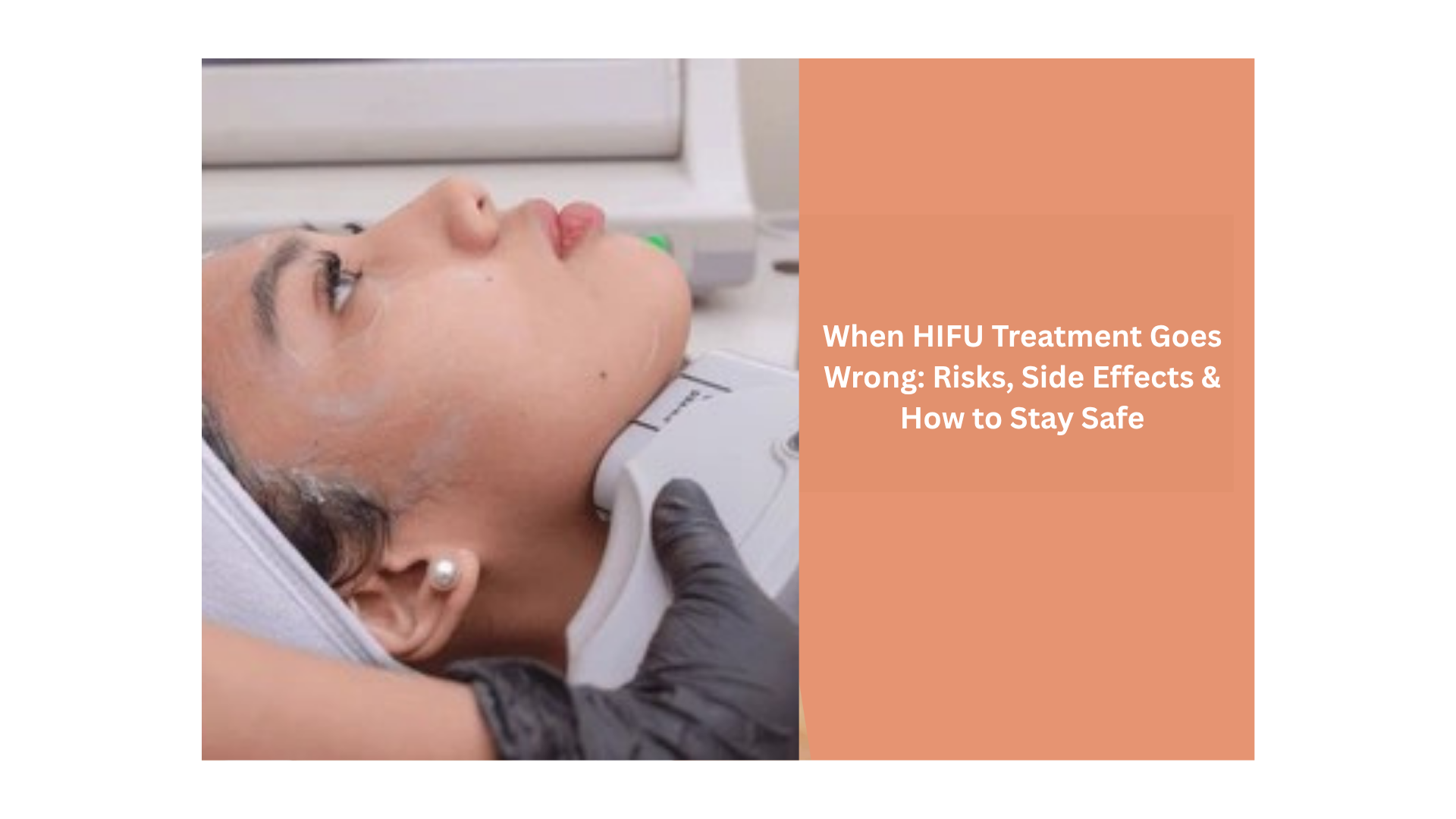
HIFU treatment (High-Intensity Focused Ultrasound) has gained immense popularity as a non-invasive alternative to a facelift. Promising tighter skin, reduced wrinkles, and improved facial contours, it has attracted thousands of beauty seekers. But what happens when a HIFU treatment goes wrong?
In this blog, we’ll cover what HIFU is, its potential side effects, real risks, and what you should know before searching for HIFU treatment near me.
What is HIFU Treatment?
HIFU treatment for face is a cutting-edge skin tightening procedure that uses ultrasound energy to stimulate collagen production deep within the skin layers. The treatment is widely chosen for:
Reducing fine lines and wrinkles
Lifting sagging skin around the eyes, jawline, and neck
Enhancing facial contour without surgery
Its appeal lies in the fact that it’s non-invasive, requires no downtime, and delivers results over time.
The Benefits of HIFU Treatment
Before diving into the negative side, let’s acknowledge the HIFU treatment benefits that make it so popular:
Non-surgical facelift alternative
No scars or incisions
Painless or mild discomfort
Minimal recovery time
Gradual, natural-looking improvement
However, as with any cosmetic procedure, results can vary and sometimes go wrong.
When HIFU Treatment Goes Wrong
While uncommon, a HIFU treatment gone wrong can lead to various issues, especially when done by unqualified practitioners or with poor-quality devices. These risks include:
1. Facial Burns or Blisters
Improper settings can cause heat injuries, leading to burns, scarring, or hyperpigmentation.
2. Fat Loss
In some rare cases, the ultrasound energy may destroy subcutaneous fat, leading to facial volume loss and a hollow appearance — the opposite of the desired effect.
3. Facial Asymmetry
Uneven application can result in one side of the face looking different from the other.
4. Nerve Damage
Improper targeting may affect facial nerves, causing temporary or (rarely) permanent numbness or drooping.
HIFU Treatment Side Effects
Even when performed correctly, HIFU treatment side effects may include:
Redness or swelling
Tingling or tenderness
Mild bruising
Temporary numbness
These typically resolve within a few days. However, if symptoms persist or worsen, consult your doctor immediately.
What to Check Before Booking HIFU Treatment Near You
Searching for HIFU treatment near me? Keep these safety tips in mind:
Choose licensed dermatologists or certified clinics
Ask about the machine (FDA-approved devices like Ultherapy are safer)
Check client reviews and before/after photos
Don’t fall for cheap deals — safety matters more than low HIFU treatment price
HIFU Treatment Before and After: What to Expect
When done right, HIFU treatment before and after photos show tighter, lifted skin with a more youthful appearance. Results begin to show in 4–6 weeks, with full results in 3 months.
But when done wrong, the transformation may be disfiguring underlining the need for choosing the right clinic.
What is the HIFU Treatment Price in India?
The HIFU treatment price in India varies based on location, clinic reputation, and treatment area:
Full Face: ₹20,000 to ₹40,000
Jawline/Neck: ₹15,000 to ₹30,000
Eye Area: ₹8,000 to ₹15,000
While cost is important, don’t compromise on safety and experience.
Final Thoughts
HIFU treatment can deliver beautiful results when performed correctly but it also carries real risks if mishandled. If you’re considering HIFU treatment for face, be aware of the side effects, understand the risks of a HIFU treatment gone wrong, and always choose certified professionals.
Invest time in research before booking. After all, your face deserves the best care not just the lowest HIFU treatment price.
FAQ About Hifu Treatment
Q. Is HIFU treatment safe?
Yes, when done by trained professionals using certified machines.
Q. What happens if HIFU treatment goes wrong?
Side effects may include burns, fat loss, or nerve damage usually due to incorrect technique or equipment.
Q. How do I find the best HIFU treatment near me?
Search for certified clinics, read reviews, and consult experienced dermatologists.